Display Glass Thickness and Material Standards for Retail Displays


Choosing the right display glass for retail showcases means you protect your products and create a professional look. Industry reports recommend a thickness between 6mm and 12mm for commercial display cases. You improve safety and durability with thicker glass, while clear materials highlight your merchandise. The type and thickness of glass change how customers view your display and help prevent accidents in busy retail spaces.
Key Takeaways
- Choose display glass thickness between 6mm and 12mm for safety and durability in retail environments.
- Use tempered glass for high-traffic areas to maximize protection and minimize injury risks.
- Select laminated glass for extra security and UV protection, especially for valuable merchandise.
- Regularly clean and inspect display glass to maintain clarity and prevent safety hazards.
- Always check for certification labels to ensure glass meets safety standards and regulations.
Display Glass Standards for Retail
Thickness Recommendations
You need to choose the right thickness for your display glass to keep your merchandise safe and your showcase strong. The thickness you select affects how much weight your retail display case can hold and how well it stands up to daily use. If you use glass thinner than 4 mm, it may shatter easily and put your staff and customers at risk. For most retail environments, you should use glass that is at least 4 mm thick. Thicker glass, such as 5 mm or 6 mm, gives you more resistance to bending and cracking. This is important in busy retail spaces where people may bump into the display.
Here is a quick guide to recommended glass thickness for retail:
| Glass Thickness | Benefits |
|---|---|
| 4 mm | Minimum recommended thickness for safety and durability in retail spaces. |
| 5 mm - 6 mm | Greater resistance to bending and cracking, ideal for high-traffic areas. |
| < 4 mm | May shatter easily under stress, posing safety risks. |
The type of display also matters. Jewelry, electronics, and apparel displays often need thicker glass for extra protection. You can use this table to match the right thickness to your display case:
| Type of Display Case | Recommended Glass Thickness |
|---|---|
| Jewelry | 8–12 mm tempered or laminated |
| Electronics | 8–12 mm tempered or laminated |
| Apparel | 8–12 mm tempered or laminated |
Thicker glass increases load capacity and rigidity. For example, 3 mm glass can hold about 0.5 to 0.7 kg per square inch. If you use 6 mm glass, the load capacity jumps to 4 to 5 kg per square inch, and the rigidity increases eight times. This means your retail display can safely hold heavier products and stay stable over time.
Tip: Always check the weight of your merchandise and the size of your display before choosing the glass thickness. Thicker glass gives you more safety and durability.
Material Choices
You have several material options for your retail display glass. Each material offers different benefits for clarity, strength, and safety. The most common choice is glass, which gives your display a modern and sleek look. You can also find other materials like acrylic and polycarbonate, but glass remains the top pick for most retail showcases.
Here are the main materials used in retail display cases:
- Glass: Used for display cases, shelving, and signage. It offers a clean and professional appearance.
- Tempered glass: Very strong and shatters into safe, blunt pieces if broken. This makes it a popular choice for retail.
- Laminated glass: Holds together when broken, giving you extra safety and excellent UV protection. It also reduces noise, which is helpful in busy shopping malls.
- Acrylic: Lighter than glass and less likely to shatter, but it scratches more easily and may not look as clear.
- Polycarbonate: Very tough and impact-resistant, but can yellow over time.
You can compare the performance of laminated glass and tempered glass in this table:
| Feature | Laminated Glass | Tempered Glass |
|---|---|---|
| Safety | Holds together upon breakage | Shatters into safe, blunt pieces |
| Strength | Moderate | Very high |
| UV Protection | Excellent | Low to moderate |
| Noise Reduction | Excellent | Low |
| Cost | Higher | Lower |
| Use Case | Storefronts, skylights | Retail display cases, windows |
When you select a material, think about the location of your display, the value of your merchandise, and the level of safety you need. Tempered glass works well for most retail display cases because it is strong and safe. Laminated glass is a good choice if you want extra protection or need to block UV light.
Note: Always use materials that meet local safety codes and industry standards for retail environments.
Why Glass Thickness and Material Matter
Durability and Safety
You want your display glass to protect your merchandise and keep your retail space safe. The thickness of the glass plays a big role in how well your showcase stands up to daily use. Thicker glass resists damage and helps prevent accidents in busy retail environments. If you choose glass that is too thin, it may crack or shatter under pressure, leading to injuries and product loss. Many retail display case accidents happen because the glass cannot handle the weight or impact from customers or staff.
Proper glass thickness and material selection are crucial for security. You should consult with experienced fabricators to decide the best thickness for your display. Quality control during manufacturing also ensures safety and durability.
Common causes of glass breakage in retail include impact from dropped objects, thermal stress from temperature changes, and edge damage during installation. Spontaneous breakage can occur if the glass has internal flaws. You can reduce these risks by using tempered glass or laminated glass, which behave more safely when broken.
Here is a table showing how glass thickness and material affect safety:
| Aspect | Description |
|---|---|
| Glass Thickness | Thicker glass resists damage and improves security in retail displays. |
| Material Type | Tempered or laminated glass improves safety when broken. |
| Quality Control | Manufacturing standards help ensure safe and durable glass products. |
Clarity and Presentation
You want your display to attract customers and show your merchandise clearly. The type of glass and its thickness affect how products look inside your retail display case. Clear glass offers minimal distortion and lets customers see your products easily. Anti-reflective glass reduces glare and improves the viewing experience. Colored glass can change how products appear and add style to your showcase.
Retailers in busy shopping malls often use clear glass sheets for display cases and signage. This choice enhances visual appeal and draws more customers. Strategic placement of display cases near entrances and main aisles increases visibility. You can use proper lighting to highlight product details and make your merchandise stand out.
| Glass Type | Thickness Impact on Clarity | Notes on Visual Appearance |
|---|---|---|
| Clear Glass | Minimal distortion | Shows products with full clarity |
| Anti-Reflective Glass | Reduces glare | Improves customer experience |
| Colored Glass | Alters color perception | Adds style to the display |
You should design your display to maximize product visibility. Adjustable shelving and impactful signage help guide customers and showcase your brand. The right glass thickness and material make your retail display both safe and attractive.
Types of Display Glass for Showcases
Choosing the right display glass for your retail showcase helps you protect merchandise and create an attractive display. You need to understand how each material performs in terms of strength, clarity, and safety.
Tempered Glass
Tempered glass stands out as the preferred choice for most retail display cases. You get exceptional impact resistance, which means your display can handle accidental bumps and dropped objects. The manufacturing process increases its surface strength by four to five times compared to regular glass. When tempered glass breaks, it shatters into small, harmless particles, reducing injury risk. You improve safety and durability in high-traffic retail environments with this option.
Tip: Use tempered glass for showcases in busy areas to maximize protection and minimize hazards.
| Glass Type | Strength Comparison |
|---|---|
| Chemically Strengthened | 6 to 8 times stronger than regular glass |
| Thermally Tempered | 4 to 5 times stronger than regular float glass |
- Tempered glass has exceptional impact resistance.
- It withstands sudden force and pressure.
- It shatters safely, reducing injury risk.
Laminated Glass
Laminated glass remains intact even when broken, which helps prevent injuries from sharp shards. You benefit from increased security, as laminated glass resists forced entry. This makes it ideal for retail environments that require high protection, such as storefronts and museum display cases. Laminated glass blocks up to 99% of harmful UV rays, protecting valuable merchandise from fading. You also get noise reduction and aesthetic flexibility for high-value retail spaces.
- Laminated glass is used in commercial interiors for strength and durability.
- It prevents shards from scattering.
- It blocks UV rays, keeping merchandise safe.
Low-Iron Glass
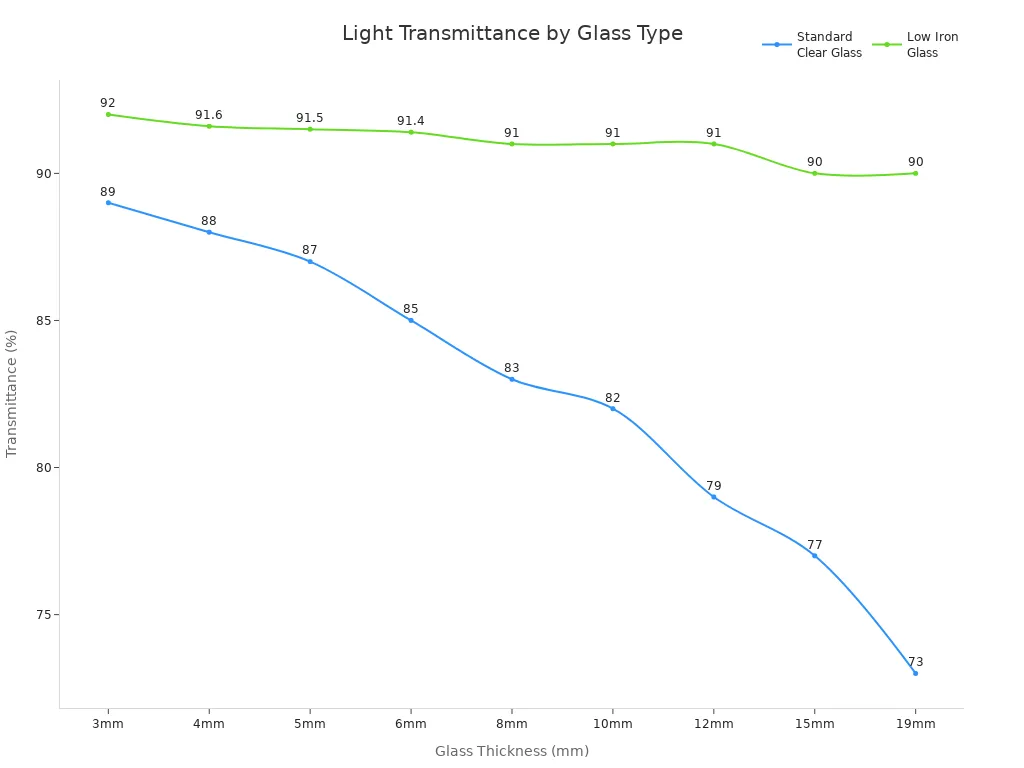
Low-iron glass, also called ultra-clear glass, offers superior clarity and light transmission. You showcase merchandise in its true color, with minimal distortion. Low-iron glass allows more light to pass through than standard glass, making products look brighter and more appealing.
| Thickness (mm) | Standard Clear Glass | Low Iron Glass |
|---|---|---|
| 3mm | 89% | 92% |
| 4mm | 88% | 91.6% |
| 5mm | 87% | 91.5% |
| 6mm | 85% | 91.4% |
| 8mm | 83% | 91% |
| 10mm | 82% | 91% |
| 12mm | 79% | 91% |
| 15mm | 77% | 90% |
| 19mm | 73% | 90% |
| Benefit | Description |
|---|---|
| Increased light transmission | Enhances brightness in displays. |
| Neutral color rendition | Shows merchandise in its true shade. |
| Enhanced visual clarity | Makes products more appealing to customers. |
Note: Use low-iron glass for premium retail displays and museum showcases to highlight product details.
Acrylic, Polycarbonate, and PETG
You may consider plastic alternatives for your display. Acrylic offers high clarity but only moderate impact resistance. PETG provides a balance of clarity and durability, with high impact resistance but a softer surface that scratches easily. Polycarbonate gives you very high impact resistance, though its clarity is moderate.
| Material | Impact Resistance | Clarity |
|---|---|---|
| Acrylic | Moderate | High |
| PETG | High | High |
| Polycarbonate | Very High | Moderate |
- Acrylic display cases cost $70 to $200.
- Glass display cases start at over $100 and can exceed $500.
You should choose the material based on your display’s location, the value of your merchandise, and the level of durability and safety you need. For most retail display cases, tempered glass provides the best balance of strength, clarity, and safety. Low-iron glass works best for premium showcases where visual presentation matters most.
Glass Thickness Guide for Retail Display Cases
Factors Affecting Thickness
When you choose the right glass thickness for your retail display, you need to think about several important factors. Each factor helps you create a safe and strong showcase for your merchandise.
- Display Size: Larger display cases need thicker glass. A bigger span puts more stress on the glass, so you must increase the thickness to prevent bending or breaking.
- Weight Load: Heavy products or frequent restocking require glass with higher load-bearing capacity. Thicker glass supports more weight and stands up to daily use.
- Type of Glass: Laminated safety glass gives you UV protection and break resistance. You can use standard thicknesses like 8.76mm, 10.76mm, or 12.76mm, depending on the height and security needs of your display.
- Security Needs: If you want extra security, you can add more laminate foils. This is often required for museum artifact cases or high-value retail displays.
- Visual Clarity: Low iron glass and anti-reflective coatings help you show your products with true colors and less glare.
- Location and Use: High-traffic areas or displays near entrances need thicker glass for extra safety.
Here is a table to help you see how these factors affect your choice:
| Specification Type | Details |
|---|---|
| Laminated Safety Glass | Use for UV protection and break resistance. |
| Standard Thicknesses | 8.76mm, 10.76mm, 12.76mm, chosen by engineer based on display height. |
| Additional Security | Add extra laminate foils for more protection, as required for museum artifacts. |
| Visual Upgrades | Choose low iron glass for clarity, anti-reflective coatings for less glare. |
| Tempered Glass Warning | Avoid for artifact cases if UV protection is needed, as it shatters and lacks UV blocking. |
Tip: Always match the glass thickness to the size, weight, and security needs of your retail display. This keeps your merchandise safe and your showcase looking professional.
Safety Standards and Certifications
Codes and Regulations
You need to follow strict codes and regulations when you choose display glass for retail showcases. These rules help you keep your store safe and protect your merchandise. Most commercial environments use standards set by organizations like ASTM International, ANSI, and local building codes. These standards cover how glass should perform in areas with high foot traffic and valuable products.
You should look for glass that meets requirements for:
- Impact resistance: This measures how much force the glass can handle before it breaks. Strong glass helps you prevent injuries and product loss.
- Thermal stress: This checks how well the glass performs when temperatures change. Glass that passes thermal tests stays strong in heated or air-conditioned retail spaces.
- Breakage characteristics: This tells you how the glass breaks. Safe glass breaks into small, blunt pieces or stays together, lowering the risk of sharp shards.
You must check with local authorities to make sure your display glass meets all safety codes. Some regions require tempered or laminated glass for showcases in busy areas. You should always ask your supplier for documentation that proves compliance.
Certification Labels
Certification labels help you identify glass that meets safety standards for retail displays. You can find these labels on the glass or in the product documentation. Common certifications include:
| Certification Label | What It Means | Where You Find It |
|---|---|---|
| ANSI Z97.1 | Glass passed impact and breakage tests | Display cases, doors |
| ASTM C1048 | Glass meets strength and clarity specs | Shelving, showcases |
| EN 12150 | Glass meets European safety standards | International retail stores |
You should always check for these labels before you install new display glass. Certified glass gives you peace of mind and helps you avoid fines or legal issues. If you see a label, you know the glass passed important tests for safety and performance.
Tip: Ask your supplier for certification documents before you buy display glass. Certified products help you keep your retail space safe and professional.
Comparison Table: Glass Types and Suitability
When you select display glass for commercial showcases, you need to match the material to your environment and merchandise. Each glass type offers unique benefits for safety, clarity, and durability. You can use the table below to compare the main options for retail, museum, and temperature-controlled display cases.
| Glass Type | Clarity | Weight | Safety Features | Durability Features | Best Use Case |
|---|---|---|---|---|---|
| Tempered Glass | Excellent | Heavier | Breaks into small, blunt pieces for safer high-traffic areas | High impact resistance, withstands substantial force | Retail showcases, shopping malls, brand counters |
| Laminated Glass | Excellent | Heavier | Plastic interlayer holds glass together, reduces injury risk | Shatter-proof, extra security for valuable items | Museum artifact cases, premium retail displays |
| Acrylic Glass | Good | Lightweight | Shatter-resistant, cracks instead of shattering | Durable, may scratch easily, practical for frequent moves | Temporary displays, portable showcases |
You see that tempered glass works best for busy retail spaces. It gives you strong protection and keeps your staff and customers safe. Laminated glass adds another layer of security. You get extra protection for valuable items and museum artifacts. Acrylic glass is lighter and easier to move. You can use it for temporary displays or when you need to change layouts often.
Tip: Always choose tempered or laminated glass for permanent retail installations. These materials meet strict safety standards and help you avoid accidents.
If you want the clearest view of your merchandise, pick tempered or laminated glass. Both types show products with minimal distortion. Acrylic glass works when you need a lightweight option, but it may scratch over time. You should consider the weight of your products and the location of your display before making a decision.
You improve the safety and appearance of your retail environment when you match the right glass type to your display needs.
Maintenance for Retail Showcases
Cleaning Tips
You keep your display glass looking clear and professional when you clean it regularly. Dirt, fingerprints, and dust can build up quickly in busy retail environments. You should wipe glass surfaces daily or weekly, depending on how much traffic your store gets. Use a soft microfiber cloth and a gentle glass cleaner. Avoid harsh chemicals, as they can damage coatings or leave streaks. Spray the cleaner onto the cloth, not directly onto the glass, to prevent drips from reaching display merchandise.
Here are simple steps for cleaning retail display glass:
- Remove loose dust with a dry microfiber cloth.
- Apply a small amount of glass cleaner to the cloth.
- Wipe the glass in circular motions for a streak-free finish.
- Dry the surface with a clean, dry cloth.
Tip: Clean glass shelves and doors before opening hours to keep displays spotless for customers.
Preventing Damage
You extend the lifespan of your retail display glass by preventing damage. Regular inspections help you spot cracks, chips, or other signs of wear early. Even small cracks can become safety hazards, so you should repair or replace damaged glass right away. Position display cases away from direct sunlight and heating vents to reduce thermal stress. Environmental factors, such as humidity and temperature changes, can affect glass durability.
You can use protective covers or screen protectors for display screens. These add an extra layer of safety against accidental bumps or scratches. Train your staff to handle glass fixtures with care during cleaning and restocking. Avoid placing heavy objects on glass surfaces, as this can cause bending or breakage.
| Maintenance Practice | Benefit |
|---|---|
| Regular inspections | Early detection of damage |
| Protective covers | Extra protection from impact |
| Careful positioning | Reduces environmental stress |
| Staff training | Prevents accidental damage |
Note: You improve safety and preserve the appearance of your retail displays when you follow these maintenance practices.
You improve the safety and functionality of your retail showcase by choosing the right glass thickness and material. Always balance clarity, durability, and security for the best results. Consult with industry professionals to meet all standards and codes.
For more guidance, review local regulations or reach out to certified suppliers who specialize in commercial display solutions.
FAQ
What glass thickness works best for high-traffic retail stores?
You should use tempered glass with a thickness of 8–12 mm for high-traffic retail stores. This thickness gives you strong protection against impacts and keeps your merchandise safe.
How do you know if display glass meets safety standards?
You can check for certification labels like ANSI Z97.1 or ASTM C1048 on the glass or product documents. Certified glass meets safety requirements for commercial retail and museum displays.
Can you use acrylic instead of glass for commercial showcases?
You may use acrylic for temporary or portable commercial displays. Acrylic is lightweight and shatter-resistant, but it scratches more easily and does not offer the same clarity or durability as tempered or laminated glass.
What is the best way to clean display glass in retail environments?
You should use a microfiber cloth and a gentle glass cleaner. Spray the cleaner onto the cloth, not the glass. Wipe in circular motions to remove fingerprints and dust without leaving streaks.
Does low-iron glass improve product visibility in display cases?
Low-iron glass gives you higher clarity and better light transmission. You can showcase merchandise with true colors and minimal distortion, making products more attractive in commercial retail and museum displays.
See Also
Best Three Glass Display Showcases For Retail Spaces
New Developments In Glass Display Technology Trends
Comparison Of The Three Best Glass Display Cases